Company
Real Talk Studio × Community Rescue Service: suicide prevention conversations, practised before they are real

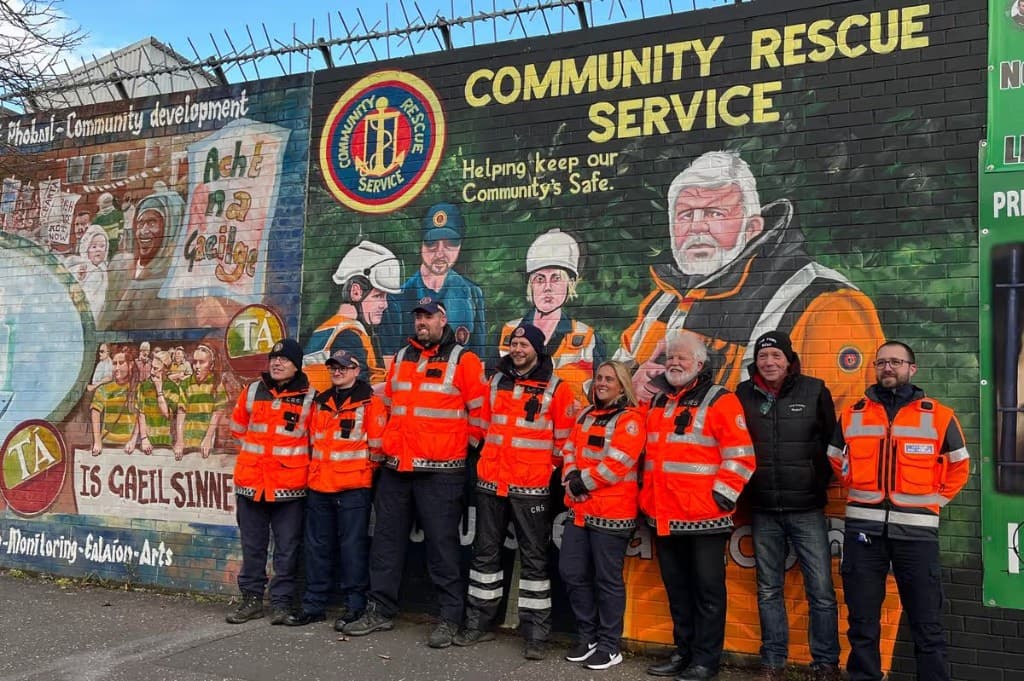
We are pleased to announce our partnership with Community Rescue Service, the only accredited Lowland Rescue search and rescue organisation in Northern Ireland.
Their volunteers are the people the police call when someone vulnerable goes missing. Many of those call-outs end in a conversation with a person in crisis. Often at night. Often near water. Often with no second chance to get it right.
Community Rescue Service bring decades of experience of those moments. Real Talk Studio brings a safe place to practise them before they are real, and the evidence that a volunteer is ready.
Practise the conversation
A CRS volunteer finds someone alive on a riverbank during a live search. The person is in crisis. What do you say first? How do you stay with someone who has decided they want to be left alone?
The session is a short public preview of the conversation CRS volunteers practise with a colleague present. You will need a microphone; you do not need a camera. If this conversation is difficult, support numbers are at the end of this article.
The backdrop: suicide in Northern Ireland
Northern Ireland has one of the highest suicide rates in these islands, and the latest figures moved the wrong way.
- 290 suicide deaths were registered in Northern Ireland in 2024, up from 221 in 2023 (NISRA, published November 2025)
- The three-year rolling average has risen from 204.7 deaths a year in 2017 to 238.0 in 2024
- The age-standardised rate was 17.4 deaths per 100,000, higher than England and Wales, Scotland or the Republic of Ireland
- 230 of the 290 deaths (79%) were men. Suicide remains the leading cause of death for men under 50 in Northern Ireland
- Deaths are concentrated in the most deprived areas, at more than twice the share of the least deprived
Behind a large share of those numbers was a search. Somebody's phone went unanswered, somebody's car was found by the water, somebody's family rang 999. That is where Community Rescue Service come in.
Who Community Rescue Service are
Community Rescue Service (CRS) is a registered charity, founded in 2007 and staffed entirely by volunteers from communities across Northern Ireland. They are the primary responder to the Police Service of Northern Ireland for high-risk missing persons, covering "hill to high water".
The scale is bigger than most people realise:
- Around 280 search and rescue volunteers and 60 support volunteers, making CRS the largest Lowland Rescue organisation in the UK
- 28 emergency response vehicles and 16 rescue boats
- Response 24 hours a day, 365 days a year, from district units across the region
- 170 emergency call-outs in Belfast alone in 2024, 30 more than the year before
The work covers missing person searches, water rescue, flood response and crisis intervention. Volunteers also run preventative safety patrols on the River Lagan. Much of what they do is unseen by design. Because of the nature of the work, the successes are rarely public.
CRS is led operationally by Sean McCarry OBE, who founded the organisation and has spent more than forty years in search and rescue, including with the Coastguard and the RNLI. He was honoured in the 2022 New Year Honours for services to search and rescue in Northern Ireland, and accepted it, in his words, on behalf of every volunteer and the community that supports them.
The conversation nobody trains for
A CRS volunteer can be trained to read the ground, search a riverbank in the dark and get a casualty out of the water. What is far harder to train is the moment they find someone alive and in crisis, and have to talk.
What do you say first? How do you stay with someone who has decided they want to be left alone? What do you do when they go quiet, or when they get angry, or when they start to walk towards the edge?
Until now, the honest answer for most volunteers has been: you learn it by doing it. Your first attempt is a real one. That is not a criticism of CRS. It is the position of almost every frontline organisation in the country. Classroom training can explain the principles. It cannot give you the feeling of the conversation, or the chance to get it wrong somewhere it does not matter.
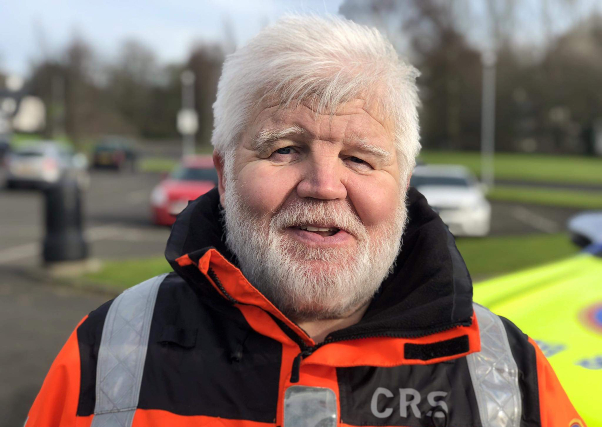
Real Talk Studio enables our volunteers to practise this conversation where the consequences are literally life or death. We find the simulations incredibly realistic and effective in helping our volunteers build confidence safely for these pivotal moments.
Sean McCarry OBE, Regional Commander, Community Rescue Service
How we are doing this, safely
A suicide intervention scenario is not a sales roleplay. We have built this work around four commitments, and we want to be open about them.
- 01
Every conversation is designed with CRS
No scenario goes live without CRS's experienced volunteers shaping it: what the person in crisis is going through, how they respond to different approaches, what a good outcome looks like and what a volunteer must never do. The intervention standards are theirs. We build the practice around them.
- 02
Safeguards and signposting are built in
Each scenario carries explicit limits on what the avatar will and will not do. Sessions signpost volunteers to support before and after they practise, because rehearsing this conversation can be hard in itself. If a session goes somewhere it should not, it stops.
- 03
Nobody practises alone
Every practice session is supported by an experienced CRS volunteer. They set the scenario up, they are there during it, and they lead the debrief afterwards. The platform gives specific feedback on what was said; the experienced volunteer gives the judgement that only years of real call-outs can provide.
- 04
Realistic, not real
No details of any actual person, case or family are used in scenario design. The scenarios are broadly based on the kinds of situations CRS volunteers face almost every week of the year, and they are built to feel that way. They are not reconstructions of real events, and they never will be.
In practice a session looks like this. A volunteer steps into a conversation with an AI avatar playing a person in crisis. They try an approach. They get specific feedback on what they said and where the conversation turned. They debrief with a CRS colleague. Then they go again. The aim is not a perfect first attempt. It is confidence built somewhere safe, so that the real conversation is not the first one.
Support the work
If this article has done one thing, we hope it is to make Community Rescue Service a little less unseen.
Volunteer roles include search teams, water rescue, fundraising and support across Northern Ireland. Follow CRS on Facebook and Instagram.
If you are struggling, or worried about someone else
- Lifeline (Northern Ireland, 24 hours): 0808 808 8000
- Samaritans (UK and Ireland, 24 hours): 116 123
- In an emergency, call 999
Practise the live version on the Real Talk Studio platform— scored attempts against characters that push back, not a script on a slide.