Commercial
20 Role Play Scenarios for Customer Service Training

Role play scenarios for customer service training only work if you can hear the caller’s first line. Below are twenty customer service role play examples — angry, billing dispute, vulnerable, cancellation, and call-centre phone calls — each with the opening, the trap, a stronger response, and the coaching point.
This is written for UK contact-centre leads. Ofcom’s complaint-handling rules and the FCA’s Consumer Duty are not American blog decoration. They change what “good” sounds like on the phone.
Updated September 2026. Download the free script pack if you want the openings and stronger responses in one file.
Real Talk Studio is the live version of these calls: agents practise against a character that pushes back, then you see who is ready for the queue.

Role play scenarios for customer service training
Fifteen call centre training scenarios, plus five extra phone-floor drills. Each one starts with the caller’s first line, because that is where agents actually freeze. Where we have a live practice, I have linked the closest match — an angry billing call is not the same as a bereavement call.
Angry customers — three variants
1. Billing error, first time, already loud
Caller opening line: “I’ve just been charged twice for the same month and I want it back today. Don’t you dare tell me to wait five working days.”
The trap: explain the billing cycle. They hear a defence of the machine that just took their money.
Stronger response: “You’re right to be angry — I can see two charges for March. I am reversing the duplicate now. You will see it as a pending credit. I will stay on while I confirm the reference. Then I will tell you the one thing I cannot do today, so I am not promising you a lie.”
Coaching point: name the error before you name the process. Then stay on the line for the reference. People escalate when they are left alone with a ticket number.
2. Repeated failure — third call about the same bill
Caller opening line: “This is the third time I’ve called about the same bill. The last two people said it was fixed. It is not fixed. I want someone who can actually do something.”
The trap: start again from “can I take your account number?” as if this were call one. They will explode, and they will be right.
Stronger response: “You should not have to tell this story a third time. I can see two previous contacts. I am not going to take the details again. I am going to read back what we think we already know. Then I will tell you what I can finish on this call, and the name of the person if I cannot.”
Coaching point: the skill is continuity, not charm. QA should score whether they opened the previous notes before they opened their mouth.
Practise a repeated angry call
3. Abusive caller
Caller opening line: “You’re useless, the lot of you. Put a manager on or I’m coming down there. Don’t speak to me like I’m stupid.”
The trap: match their volume, or stay so soft that you sound like a recording. Both make it worse. The other trap is staying on a line that has become a threat.
Stronger response: “I will help you with the account. I will not stay on a call where I am being sworn at or threatened. If we can talk about the bill, I am here. If you threaten me or my colleagues, I will end the call and we will follow our process. Which one are we doing?”
Coaching point: this is a safety and conduct drill, not a “kill them with kindness” drill. Agents need a practised sentence for ending a call, and a manager who will back it. Ofcom still expects a complaints path; it does not require anyone to absorb abuse.
Billing disputes
The first angry call is often a billing dispute wearing a volume. These two are the dispute itself, without the swearing.
16. Itemised bill vs the advertised price
Caller opening line: “Your ad said £29. I’m looking at £47. Don’t tell me I missed the small print.”
The trap: read the tariff name. They hear “you are too stupid to have read the email we buried.”
Stronger response: “I can see £29 on the advert you are looking at, and £47 on this bill. I will tell you which figure I can stand behind today, and whether I can credit the difference while we correct the tariff. I will not hide behind small print. If the advert and the account do not match, that is our problem.”
Coaching point: name both numbers. Then say which one you can act on. Guessing the marketing site is how you create the next complaint.
17. Direct debit taken twice after a “fix”
Caller opening line: “You said the duplicate was reversed. It has come out again. My rent is short.”
The trap: “I can see a pending credit.” Pending is not money they can use for rent tonight.
Stronger response: “You should not have been taken twice. I can see the second take. I am not going to tell you it is pending and leave you short. I will tell you the date the money is actually back, and what I can do today if that date is after rent. Stay on.”
Coaching point: this is continuity plus Consumer Duty. If rent is at risk, you are not in a billing FAQ any more.
Practise a repeated billing miss
Vulnerable customers — Consumer Duty is the point
The FCA’s Consumer Duty is not a poster. It asks whether your people can recognise vulnerability and adapt, including when the caller does not use the word. These three are the ones we see new agents fail first.
4. Financial difficulty — heating or eating
Caller opening line: “I know I’m behind. I just… I can’t do the full amount. I’ve got the kids this week and the direct debit is going to bounce again.”
The trap: stay in collections script: next payment date, consequences, “have you tried a payment plan” as a leaflet. They told you they cannot do the full amount. The script is now the risk.
Stronger response: “Thank you for telling me that. I am going to stop the collection path for a minute. I need to understand what you can pay without missing rent or food, and then I will tell you the options I actually have — forbearance, a hold, or a different date — not a plan you will fail on Tuesday.”
Coaching point: Consumer Duty here is script override. Score whether they recognised the disclosure and changed path, not whether they completed the usual flow.
5. Bereavement
Caller opening line: “I’m calling about my mum’s account. She died last month. I don’t even know what I’m supposed to do. Your last letter was in her name.”
The trap: “Sorry for your loss” as a speed bump, then a list of documents. Or worse: asking them to “confirm the password on the account.”
Stronger response: “I am sorry. I will not make you prove the death to me on this call like a password reset. I will tell you the two things I can do now without the certificate, and the one thing that has to wait. You do not have to get through this in one go. Do you want me to slow down, or do you want the list?”
Coaching point: pace is the skill. A perfect process delivered at handling-time speed is still a bad bereavement call.
6. Confused elderly caller
Caller opening line: “I’ve had a letter and I don’t understand it. My son usually does this but he’s away. Am I in trouble? I don’t want you to cut me off.”
The trap: talk at document-speed. Or, equally bad, ask them to put the son on and then treat the son as the customer without checking authority.
Stronger response: “You are not in trouble. The letter is about a price change, not a debt. I will say that again. I can go through it in short pieces, and I can book a call when your son is back if you would rather. I will not take a payment today unless you are sure. Are you somewhere you can write two words down?”
Coaching point: UK firms get this wrong by chasing first-contact resolution on a caller who needed first-contact clarity. Offer a callback. Write the two words. Do not upsell.
Practise slowing down for a vulnerable caller
18. “My neighbour usually helps with this”
Caller opening line: “I don’t really do the computer. My neighbour usually helps. Can you just take the payment from me now so I don’t have to ask her?”
The trap: take the payment because it is faster, or refuse everything because “capacity.” Both can be harm.
Stronger response: “We can go slowly. I will not take a payment you are not sure about. Tell me what you want to happen on this account, in your words. If you would rather I call back when your neighbour is there, say when. I will not rush you into a yes because it is easier for my handle time.”
Coaching point: authority and capacity are not the same as “has a relative.” Check what they understand. Offer a callback. Do not harvest a payment from confusion.
Practise a vulnerable-customer hold
Complex queries
7. The query that spans two systems
Caller opening line: “Your app says one balance, the letter says another, and the person in the shop said something else. Which one is real?”
The trap: pick a system and defend it. Or put them on hold for eight minutes and come back with “the system is running slow.”
Stronger response: “They should match. They do not. I am going to treat that as our problem, not yours. I can see the app and the letter. I cannot see what the shop said. I will tell you the figure I can stand behind today, what I will raise, and when you will get a single number in writing.”
Coaching point: do not guess across systems. One number you will put in writing beats three confident maybes.
Practise composure on a messy account
8. The caller who has already researched the policy
Caller opening line: “I’ve read section 4.2 of your terms. You have to refund this. I’ve screenshotted it.”
The trap: “I’m not sure that’s how it works” — now you are in a legal seminar you will lose on tone even if you are right.
Stronger response: “I have the terms in front of me. Section 4.2 covers X, not Y. I will read the sentence that applies, then I will tell you the decision I can make, and the route if you want it reviewed. I will not argue with the screenshot. I will apply the line.”
Coaching point: this is a composure drill. The coaching is: read, decide, offer the review path. Do not improvise policy.
Practise holding a line when someone has “done the research”
Retention and cancellation
9. “Cancel it. I’m done.”
Caller opening line: “I want to cancel. Don’t try to save me. Just cancel it.”
The trap: ignore the instruction and launch the save script. Or, the opposite, cancel without checking they understand what dies (insurance, pending claim, bundled product).
Stronger response: “I will cancel it if that is still what you want at the end of this call. I need two minutes so I do not cancel the wrong thing — there is a pending claim / a bundled line / a notice period. Then I will do what you asked. If a cheaper tariff would change your mind I will say it once. I will not make you earn the cancel.”
Coaching point: retention that ignores a clear cancel instruction is how you get complaints and, in regulated firms, conduct issues. One offer. Then honour the ask.
10. Competitor is cheaper
Caller opening line: “Your competitor quoted twenty percent less. Why should I stay? And don’t tell me about your award-winning service.”
The trap: panic discount. Or a brand speech. Both sound like you have nothing.
Stronger response: “They may be cheaper. I will not invent a reason you should ignore a price. What I can do is tell you what you lose if you move — the two things on this account that are not in their quote — and the one retention I am actually allowed to give you. If that is not enough, I will help you leave cleanly.”
Coaching point: this is the same muscle as a sales renewal. See also customer says competitor is cheaper.
19. Cancelling after a price rise letter
Caller opening line: “I’ve had the increase letter. I’m not paying that. Cancel it today. I already told the last person.”
The trap: a save script that ignores they already asked once. Or cancelling the wrong product in a bundle.
Stronger response: “I will cancel if that is still what you want when I have named what dies with it. There is a pending claim / a bundled line / a notice period. Then I will do it. I can say the one cheaper tariff once. I will not make you earn the cancel on call two.”
Coaching point: a second save attempt after a clear cancel is how you get a complaint file. One offer. Then honour it.
Complaint escalation
11. “I want to speak to your manager”
Caller opening line: “I want to speak to your manager. I’m not talking to you. Now.”
The trap: “My manager would tell you the same thing” — true, maybe, and useless. Or fetching a manager as a treat before you have tried the thing you can do.
Stronger response: “You can have a manager. I will not make you audition for one. Before I get them, I can reverse X / raise a formal complaint / give you a written decision. If you still want the manager after that, I will stay on the line and brief them so you do not start again.”
Coaching point: Ofcom-style complaint handling is about a clear path, not about winning the power struggle. Brief the manager. Do not vanish.
12. The complaint that is really a vulnerability
Caller opening line: “This is an official complaint. I want it logged. Your company has harassed me and I’m going to the ombudsman.”
The trap: go full complaint-template and miss that they are scared, unwell, or drowning in letters.
Stronger response: “I will log the complaint. You do not have to shout to get that. I also want to check something that matters more than the category: are these letters arriving faster than you can deal with them? If they are, I can pause outbound contact while the complaint is open. Which do you want first — the complaint reference, or the pause?”
Coaching point: dual path. Log the complaint and test for vulnerability. Consumer Duty does not pause because someone used the word “complaint.”
Practise a vulnerable complaint
Delivering bad news
13. Claim denied
Caller opening line: “I’m calling for an update on my claim. I really need this to go through. I’ve already told my landlord it was sorted.”
The trap: bury the no in sympathy, or read the exclusion like a robot. Both create a second call.
Stronger response: “I have an update, and it is not the one you wanted. The claim is not being paid, because of [specific exclusion in one sentence]. I will say that again. I can tell you the review route and the deadline. I cannot change the decision on this call. Do you want the review steps now, or do you want me to send them and stay for questions?”
Coaching point: lead with the decision. Then the reason. Then the route. Do not let them discover the no in paragraph four.
Practise delivering a no without burying it
14. Refund refused
Caller opening line: “I’ve been a customer for nine years. You’re really going to refuse a refund over this?”
The trap: “If it were up to me…” — you just created a manager demand and admitted the decision is arbitrary.
Stronger response: “Nine years matters, and it does not change this decision. I cannot refund that charge because [rule]. I can do [the thing you can do]. I will not pretend I would refund it if I were nicer. If you want that reviewed, here is the path. I will take the complaint if you want it logged.”
Coaching point: loyalty is not a policy. Agents who freelance goodwill create inconsistent outcomes and complaints about fairness.
Practise holding a refused refund
The talkative caller versus AHT
15. They want to chat. You are on a handle-time target.
Caller opening line: “Before we start, can I just tell you what’s been going on? Because it’s not just the bill, it’s the whole year, and nobody listens…”
The trap: either cut them off so hard you get a complaint, or let a 7-minute call become 22 with no outcome.
Stronger response: “I will listen to the part that affects what I can do on this account. I have about four minutes for the story so I can still fix the bill. Tell me the last thing that went wrong — not the whole year — and I will come back with a next step. If you need a longer conversation, I will book it rather than rush you.”
Coaching point: this is an operations design problem as much as a skill. If your only metric is AHT, you will punish the agent who correctly slowed down for a vulnerable caller, and reward the one who clipped them. Split the queue. Score outcome and recognition, not just time.
Call-centre phone calls
20. The promised callback that never came
Caller opening line: “Someone said they’d call me back before lunch. It’s four o’clock. I’m not telling this story again.”
The trap: take the details from scratch. Or apologise for “the team” without opening the last note.
Stronger response: “You should not have to wait, and you should not have to start again. I can see the promise from this morning. I am not going to take the account number. I will read back what we already know, finish what I can on this call, and if I cannot, you leave with a name and a time I can keep.”
Coaching point: this is a phone-floor continuity drill. QA should score the notes, not the greeting.
Speed to competency: why reading scripts does not produce agents
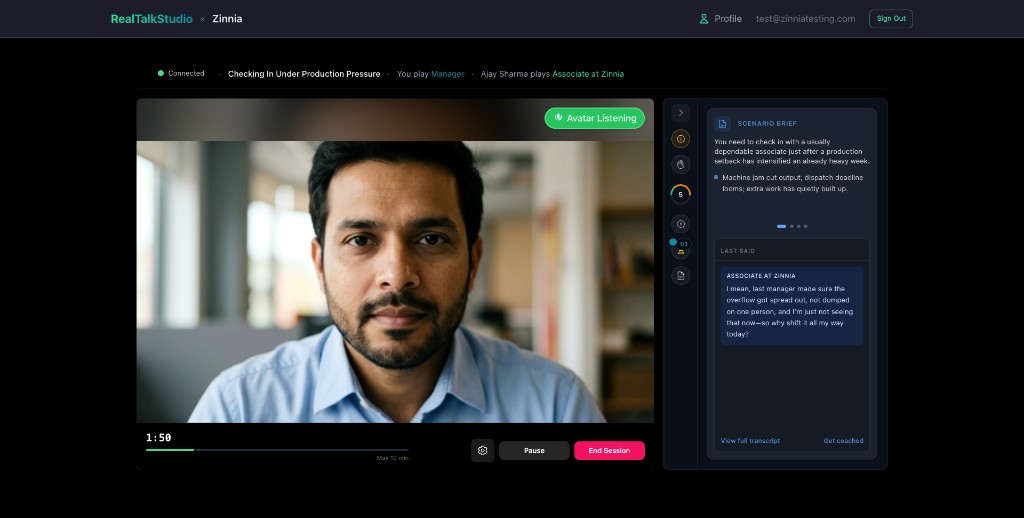
The floor is not the first place someone should hear a third-call billing complaint.
New agents can recite the opening. They cannot yet choose which opening they are in. That choice is the job.
Reading customer service training scenarios helps them recognise types. It does not make the response automatic. Automatic is what you want before they go live on a vulnerable-customer or complaints queue: the body still does the right thing when the caller is crying, swearing, or quoting terms.
In the work we have done with contact-centre teams — including a controlled period with OVO’s Direct Debit advisers — the useful question was not “did they complete onboarding?” It was “who is ready for this call type, and who should not touch it yet?” That is a verification question. Side-by-sides after the customer has already had the call are too late. OVO moved Direct Debit process adherence from 65% to 97% in twelve weeks on the calls the team had practised. Speed to competency is not a slide. It is a scored attempt before the queue.
What “practised until it’s automatic” looks like:
- The agent has done the same call type enough times that the first ten seconds are stable.
- Someone has heard them fail the third turn — the pushback — and they have done it again the same week.
- A lead can point at a scored attempt, not a certificate, before they remove the buddy.
How to use this list in a week of training
Do not run all twenty. Pick the three that match last month’s QA fails.
Day 1. Angry variant that matches your queue (billing, repeat, or abuse). Listen to the third turn, not the greeting.
Day 2. The vulnerable variant you are least staffed for. If you do not have a separate queue, this is the day you notice.
Day 3. Bad news or cancel — whichever creates the ombudsman file.
Buddy the first live hour after those three. Score the live hour on the same card as the sim. If the cards differ, you trained a theatre.
UK-specific extras to put on the wall, not in a footnote: Ofcom expects a clear complaints path, not a charm offensive. The FCA’s Consumer Duty expects recognition and adaptation, including when the caller never says “vulnerable.” Those are coaching points 4, 5, 6, and 12. American call-centre communication blogs will not mention them. That is why this page exists as a market landing asset as well as a training list.
If you want the wider method, read scenario-based training. For the rest of the workplace catalogue, use the 50 workplace roleplay scenarios. For manager-side conversations that sit behind bad calls, use the coaching scenarios for managers.
See how we train contact-centre teams
FAQ
Frequently asked questions
01What are role play scenarios for customer service training?
They are practice calls with a real opening line, a typical trap, and a stronger response — used so agents rehearse angry, vulnerable, and complex contacts before a live customer is on the line.
02How do I write call centre training scenarios that are not cheesy?
Start from last month’s QA fails, not from a stock “Karen” character. Use the caller’s actual first sentence. If your people laugh at the scenario, it is not close enough to the queue.
03What is the difference between customer service role play examples and a call script?
A script is what you hope they will say. A role play is what happens when the caller does not follow the script. Train the second thing.
04Do I need UK-specific customer service training scenarios?
If you are in a UK regulated sector, yes. Consumer Duty, Ofcom complaint handling, and vulnerable-customer expectations change the correct response. US blog posts will not mention them.
05How many angry customer role play reps before someone goes live?
Enough that a lead has heard them recover from abuse, repetition, and a billing error — not a number I can invent for your queue. Readiness is a verified attempt, not a calendar date.
Practise the live version on the Real Talk Studio platform— scored attempts against characters that push back, not a script on a slide.