October 2026
Handling a sexual harassment complaint
This is practical commentary for people, HR, and compliance leaders — not legal advice. Confirm commencement dates, wording, and what the 2027 regulations require with qualified UK employment counsel before you rely on any of it in a policy or a board paper.
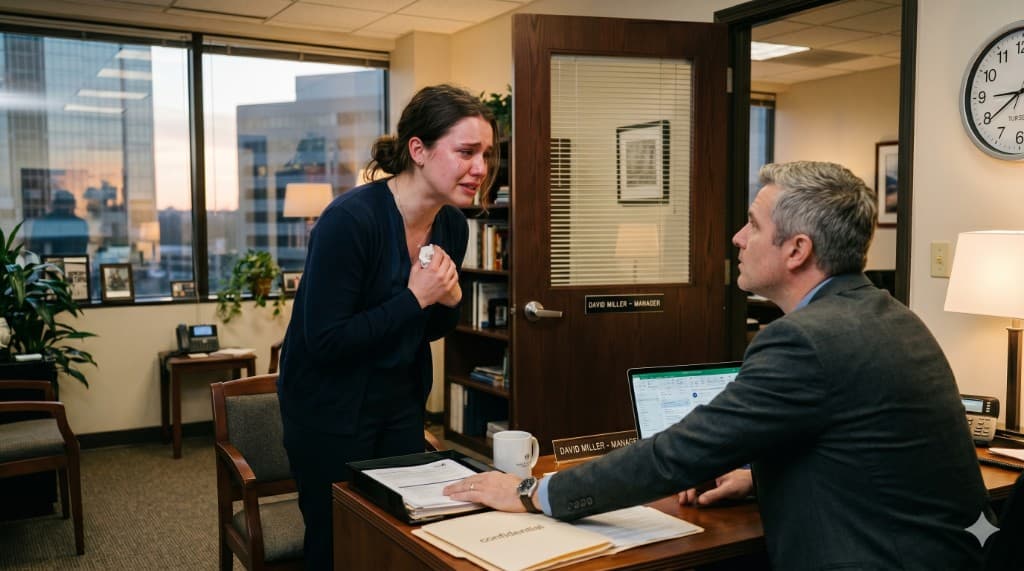
How to handle a sexual harassment complaint is not a flowchart. It is two conversations most investigators have never practised: the first one with the complainant, and the interview with the accused. Sexual harassment investigation training that only covers process — timelines, note-taking, terms of reference — leaves both of those to improvisation. Improvisation is how you get a technically correct case that nobody will ever trust again.
Once it is a complaint, the standard is different from a manager’s first word after banter: fairness to both sides, no predetermined outcome, and — since 6 April 2026 — whistleblowing detriment risk if that first conversation goes wrong. Line managers still need the private follow-up after banter and the disclosure that asks for secrecy. You need investigators who can sit in the room.
The preventative duty on all reasonable steps includes “what to do when a complaint is made.” Having a policy is step 6 on paper. Being able to sit in the room is the step.
The first conversation with the complainant
This is the highest-leverage hour in the file. Everything after it — terms of reference, interviews, outcome letters — is downstream of whether this person still believes the organisation is safe.
They may be angry, flat, precise, or still minimising. They may want it stopped without “a big thing.” They may already have told a manager who promised to “look into it” and disappeared. The job in that first hour is not to complete the investigation. It is to listen, explain the process without drowning them, not promise what the organisation cannot control (anonymity, a particular outcome, that nobody will find out), and not make them feel like a problem to be processed.
Traditional investigation training treats this as a checklist: thank them, explain confidentiality limits, offer EAP, take a statement. The checklist is not wrong. The failure is tone and sequence. Leading with process sounds like you care more about the organisation than about what they just said. Leading with warmth and then never explaining the process sets a trap for later. The skill is both, in the right order, while they are watching your face.
Do
- Let them finish. Reflect in their words.
- Name the seriousness without theatrical outrage (outrage makes the story about you).
- Explain what happens next in hours and names, not “in due course.”
- Explain the limit on confidentiality before they assume a pact.
- Ask what they need to feel safe this week (shifts, reporting lines, contact with the accused) — then only commit to what you can actually do.
Do not
- Ask why they did not come sooner.
- Contact the accused “just to hear the other side” before you have a plan.
- Joke, bond, or share your own story.
- Promise that they can remain anonymous if your process cannot deliver that.
- Tell them to keep it quiet “for the investigation.” That sentence is how detriment starts.
Line managers who are the first human — not the investigator — should not run this interview. They should signpost. If you have not trained that split, the complaint arrives pre-damaged. That is why the manager conversation and the investigator conversation are different skills, and why they belong in different parts of the programme.
The interview with the accused
Fairness is not a vibe. The accused is entitled to know the case they have to answer, to be heard, and not to be sentenced in the corridor. Sexual harassment investigation training that only prepares people for the complainant produces interviews that sound like a verdict with a pause for denial.
The conversation is hard because the investigator must hold two truths: the organisation takes the allegation with full seriousness, and they have not decided it happened. That is a narrow road. Investigators drift. They bond (“I’m sure this is a misunderstanding”). They prosecute (“so you admit you said…”). They hide behind notes and never make eye contact. Each drift becomes a later claim — prejudgment, or a process so timid it retraumatises the complainant when the outcome lands.
Those are the turns to put in the programme: the opening, the moment they get angry, the moment they cry, the moment they name the complainant as “sensitive” or “out to get me.” A protocol PDF does not contain them.
After the interview, the team still has to work. Retaliation is often quiet — the diary that no longer includes someone, the joke that stops when they walk in. Managers need that conversation too; it lives on the manager training page. Investigators need to brief managers without turning them into a second inquiry.
What investigation training usually misses
Most UK investigation courses are excellent on structure: scope, evidence, credibility, report. They are weak on the mouth.
You can pass a written assessment on ACAS-style process and still freeze when a complainant says “if this gets out I’m done,” or when the accused’s lawyered-up opening is “this is a career assassination.” Sexual harassment investigation training that counts as a reasonable step has to include those hours as spoken practice, scored against your own procedure — not a generic “difficult conversations” elective.
The status quo is to send investigators on a two-day course once, then assume the next case is covered. Gehlen is about stale training for a reason. Investigation skill decays too. A case you have not rehearsed in two years is not a muscle. It is a memory of a slide.
Put investigators in the risk assessment conversation table. If the row says “HRBP” and the practised column is empty, you have a named gap. The evidence checklist is where that gap becomes a board sentence.
Whistleblowing: complaints are now qualifying disclosures
On 6 April 2026, sexual harassment became a qualifying disclosure under UK whistleblowing law. That is already in force. It is not an October 2026 extra.
The practical meaning for the first conversation: if someone is raising sexual harassment, they may now have protection from detriment and from unfair dismissal connected to that disclosure. Getting the intake wrong is not only a poor investigation. It can be a separate legal problem — delayed action, informal pressure to drop it, “keep this between us,” changed duties, exclusion from meetings.
Traditional “let’s try to resolve this informally” culture has to be rewritten. Informal resolution can still be what the person wants. It cannot be what you impose because a formal case is inconvenient. The investigator’s first conversation is where that line is either held or lost.
Acas covers the Employment Rights Act timetable, including the whistleblowing change, here. Confirm how it applies to your facts with counsel. Do not wait for a detriment claim to discover that your intake script still asks people to stay quiet.
Practise both conversations
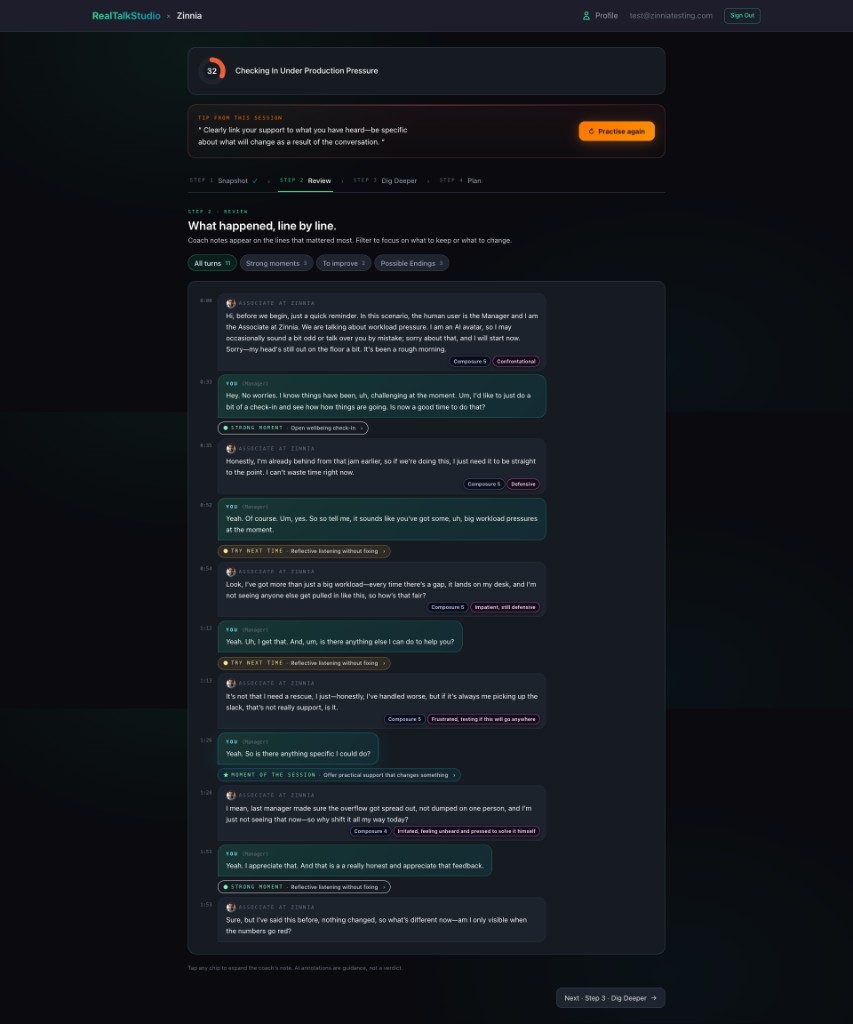
Real Talk Studio is the rehearsal room for the hours the course cannot stage without using colleagues as props.
- Complainant first response — care and process, without minimising and without a secrecy pact. The public version of the manager-side cousin is the follow-up after a sexualised comment and Please don’t tell anyone. Investigators need the same muscles with a tighter process brief. We build that as a scored scenario against your procedure.
- Interview with the accused — firm, fair, no prejudgment, no collapse when they attack the process. This is the conversation that turns hostile. It belongs in the same programme as conduct-risk practice: the investigation that turns hostile.
- Evidence — dated attempts, not a certificate from a two-day course in 2023. See evidence and analytics.
If the complaint involves a customer rather than a colleague, read third-party harassment in parallel. The investigation still has to be fair. The prevention file is different: the agent on the phone needed a shut-down sentence before anyone opened a case.
FAQ
Frequently asked questions
01How should we handle a sexual harassment complaint?
Listen first, explain process and confidentiality limits honestly, protect safety in the short term, and investigate fairly without prejudging. Do not improvise the first conversation. Do not treat “informal” as a way to make it go away.
02What is sexual harassment investigation training for?
Teaching investigators to run a fair process and to hold the two rooms — complainant and accused — without compounding harm. Process-only courses leave the conversations unpractised.
03Are sexual harassment complaints whistleblowing?
From 6 April 2026, sexual harassment can be a qualifying disclosure. That protects against detriment and related unfair dismissal. Getting intake wrong now carries extra legal risk. Confirm application with counsel.
04Who should have the first conversation?
A trained designated person, not whichever manager was free. Line managers should signpost, not investigate in the corridor. If your designated people have never practised the conversation, the designation is a name on a chart.
05How do we evidence that investigators are ready?
Dated, scored practice of the first conversation and the interview with the accused, plus the written procedure. A two-day course attendance list from a previous year is a weak story under all reasonable steps.